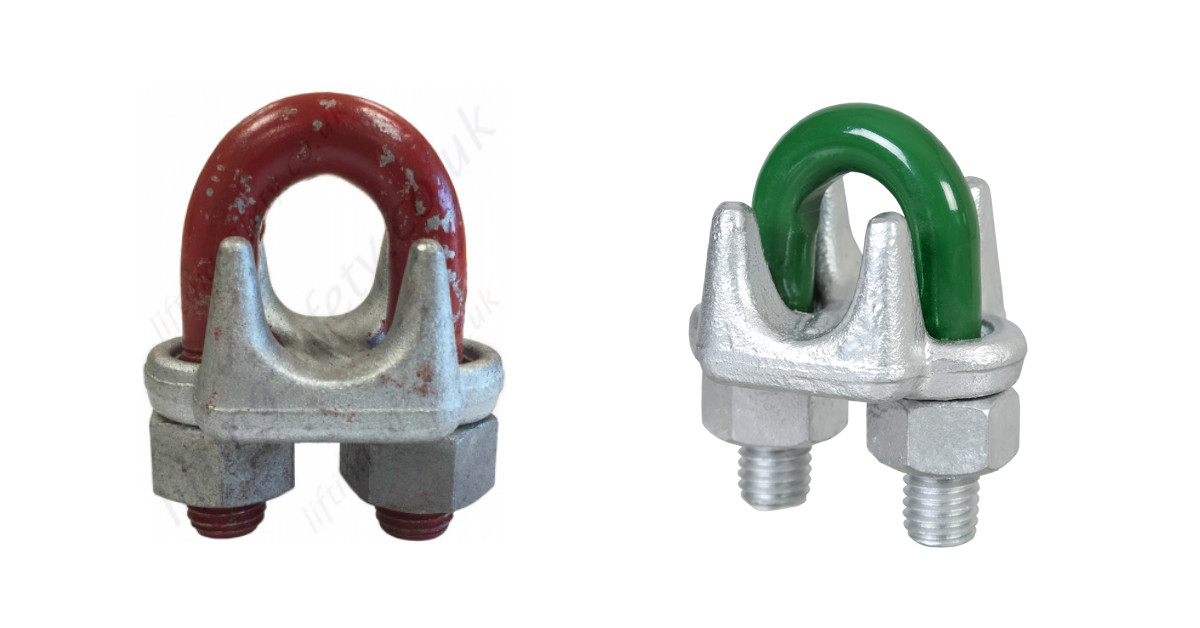
Failures involving bulldog grips are not caused by the products themselves but by common installation mistakes that reduce performance and endanger equipment and personnel. Understanding these errors and knowing how to avoid them is critical for safe and reliable lifting operations.
Here are some common installation mistakes involving bulldog grips and how to avoid them:
- Installing the Bulldog Grip Wrongly: A very common error is placing the saddle on the wrong side of the rope. Wrong placement significantly reduces holding strength and increases the risk of rope slippage. To avoid this, training and visual diagrams should always be available for riggers and technicians during field installation.
- Using Too Few Bulldog Grips: Many operators do not have an idea of the recommended number of bulldog grips required to secure a rope safely. The required number depends on the rope diameter, load capacity, manufacturer recommendations and industry standards (e.g OSHA, ASME, and BS standards). To prevent bulldog grip failure, always refer to the product specification chart. Generally, larger wire ropes require more grips spaced correctly along the dead end.
- Over-Tight or Loosened Nuts: Improper torque is another common bulldog grip installation mistake. Under-tightening may cause the wire rope to slip under load, while over-tightening can damage or deform the rope strands, reducing strength. To avoid this, use a torque wrench to tighten according to manufacturer specifications, re-tighten after loading, as wire strands compress under pressure, and also conduct routine inspections over time. Also, you should ensure the load is distributed evenly across the termination, improving performance and reducing slippage.
- Failure to Test Load: Many rigging failures occur because installations are not tested before full operation. Without test loading, installers may not spot slippage or structural weaknesses early enough. You can avoid this by simply inspecting for movement and applying a test load before the lift or towing operation.
- Using Worn-Out Bulldog Grips: Bulldog grips are used repeatedly without proper inspection and maintenance. Corroded, cracked, or misshapen grips may fail under load even with proper installation. Before use, always inspect the saddle shape, bolt threads, nut condition, and signs of rust or stress cracking and replace any worn component immediately.
- Using Bulldog Grips on the Wrong Rope Type: Some users attempt to install bulldog grips on synthetic or plastic-coated ropes, which results in poor grip and slippage. Bulldog grips are designed primarily for wire ropes. If coated cable must be used, the coating should be stripped where the grips are installed.
CONCLUSION
Bulldog grips are simple but critical rigging components. Their performance depends heavily on correct installation practices, including proper direction, spacing, torque, number of grips, and the condition of the rope and hardware. This is why we recommend purchasing Bulldog grips from Oilfield Solutions Ltd. As the largest stockist of lifting gears in Nigeria, we offer premium lifting gears that keep your operations running smoothly and significantly reduce the risk of accidents and injuries associated with lifting gear operations.
For expert guidance on choosing the right lifting gears and maintaining your lifting equipment, contact us today at delivery@oilfieldsolutions-ng.com